Muscle Recovery After 50: Can Scans Predict Your Comeback?
You pulled a hamstring in March. Or your shoulder finally gave out after years of ignoring it. Or you just took eight weeks off because life happened, and now you're back in the gym wondering: is my body actually rebuilding, or am I chasing a number that isn't real anymore?
For anyone over 50, this question isn't rhetorical. Muscle recovery after 50 doesn't follow the same timeline it did at 30. Protein synthesis is slower to respond to training stimulus, hormonal shifts change how efficiently you rebuild lean tissue, and the margin for error on nutrition and recovery gets thinner every year. The good news: it's measurable. The bad news: most people are measuring the wrong things.
Why the Scale and the Mirror Lie About Recovery
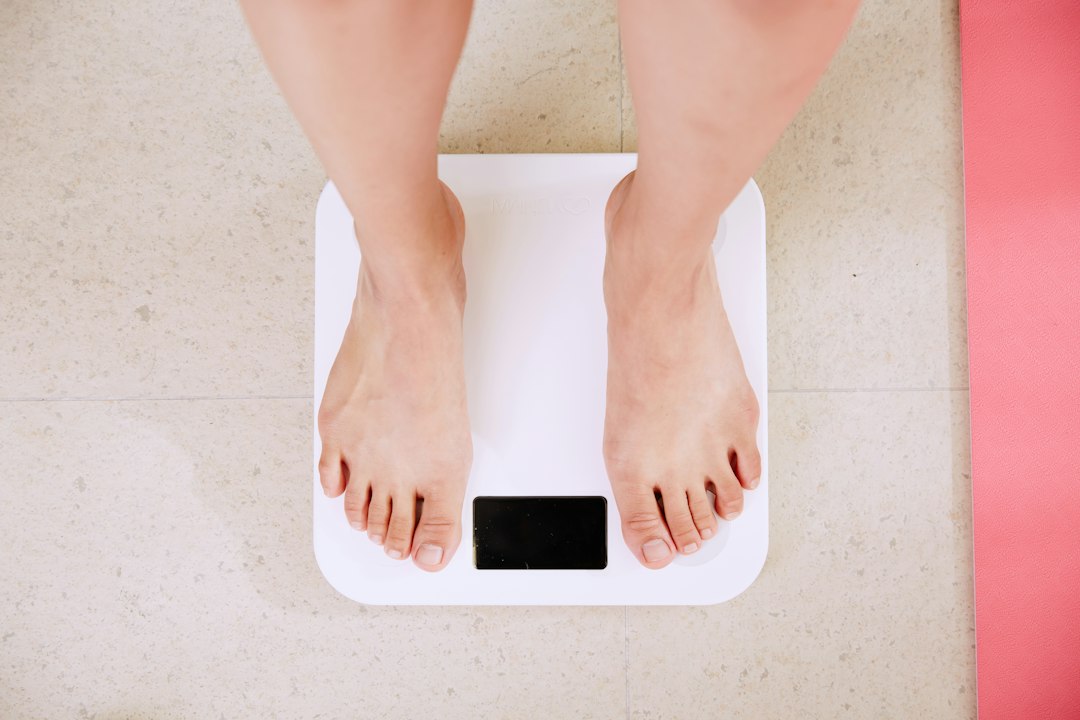
When you're rebuilding after an injury, illness, or a training gap, your weight can climb back to "normal" while your actual muscle mass stays depressed — because fat regained faster than muscle rebuilt. This is the same phenomenon we've documented in lean mass loss after 50, where Bay Area scan data consistently shows people returning to their pre-injury bodyweight without returning to their pre-injury muscle mass. The scale says "comeback complete." The tissue underneath says otherwise.
This is precisely why searching for a body composition analysis near me matters more after 50 than at any other life stage. A gym mirror, a bathroom scale, or even a strength number on a barbell can't tell you whether the tissue you're rebuilding is muscle, fat, or water retention from inflammation. You need a body spec that actually separates these compartments.
What a DEXA Scan Body Spec Actually Predicts
A clinical-grade DEXA scan body spec breaks your body into three components — fat mass, lean mass, and bone mineral content — region by region. For someone rebuilding after 50, three numbers matter more than the rest:
- Appendicular lean mass index (ALMI): the muscle on your arms and legs, which correlates directly with functional strength and fall risk. We've covered why this is the muscle metric Stanford researchers found predicts longevity — and it's the single best early signal of whether your comeback is real.
- Left-right symmetry: injuries almost always create compensation patterns. A scan catches whether your recovering side is closing the gap or whether you're quietly loading the healthy side and widening the imbalance.
- Bone mineral density: especially relevant if your setback involved reduced weight-bearing activity for any length of time. As we've noted in coverage of bone loss accelerating in your 40s, density doesn't rebuild on the same timeline as muscle, and it needs its own tracking.
None of these show up on a scale. All three show up on a scan.
Can a Scan Actually Predict Your Comeback?
Not on its own — no single scan is a crystal ball. But a baseline scan followed by a 60- to 90-day retest gives you a trendline, and a trendline is predictive in a way a single data point never is. If your ALMI is climbing and your visceral fat is flat or dropping, your recovery trajectory is sound, regardless of what the scale says. If your weight is up but ALMI is flat, you have your answer early — before months get wasted on a plan that isn't working. This is the same logic behind why skipping scans after 90 days leaves progress invisible: without the retest, you're guessing.
We see this pattern constantly with clients rebuilding after 50. Someone comes in six weeks post-injury, strength numbers climbing on paper, feeling optimistic. The scan shows the injured limb still trailing 8–12% behind the uninjured side in lean mass. That's not a failure — it's exactly the kind of asymmetry we detail in what scans actually measure about left-right muscle imbalances — but it's information you can't get any other way, and it changes how the next block of training gets programmed.
Why Age Changes the Math
Muscle recovery after 50 is slower for a real physiological reason: anabolic resistance. Your muscle tissue needs a bigger stimulus and more protein per meal to trigger the same growth response you got in your 30s. This means the "80% quantity" principle we apply to nutrition — hitting your calorie and protein targets consistently — carries even more weight post-injury. It also means training volume and consistency (the 80% of programming that actually matters) need to be dialed in with less room for guesswork, since you don't have decades of runway to correct course slowly.
This is where the difference between "aging despite exercise" and "aging with a plan" becomes visible in the data. If you're rebuilding but not tracking, you might be following the wrong playbook for months — something we've broken down in why aging adults gain weight despite exercise.
What This Looks Like at Kalos
At Kalos, a comeback story starts with a baseline scan — not a guess. From there, one of our NASM-certified performance analysts reads the body spec with you: where lean mass sits relative to your age and frame, whether asymmetry needs correcting, whether bone density needs its own attention. Then coaching translates that data into a specific plan for your training, your nutrition, and your recovery — the connection between behavior and outcome that a scan alone can't provide. Monthly rescans track whether the plan is actually working, so nothing about your comeback stays invisible for long.
If you're rebuilding after 50 and searching for a body composition analysis near you in San Francisco, Palo Alto, or San Jose, the fastest way to know if your comeback is real is to measure it — not guess at it. All scans and coaching memberships are HSA/FSA eligible.

Ready to measure what matters?
Book your DEXA scan today and stop guessing about your health.