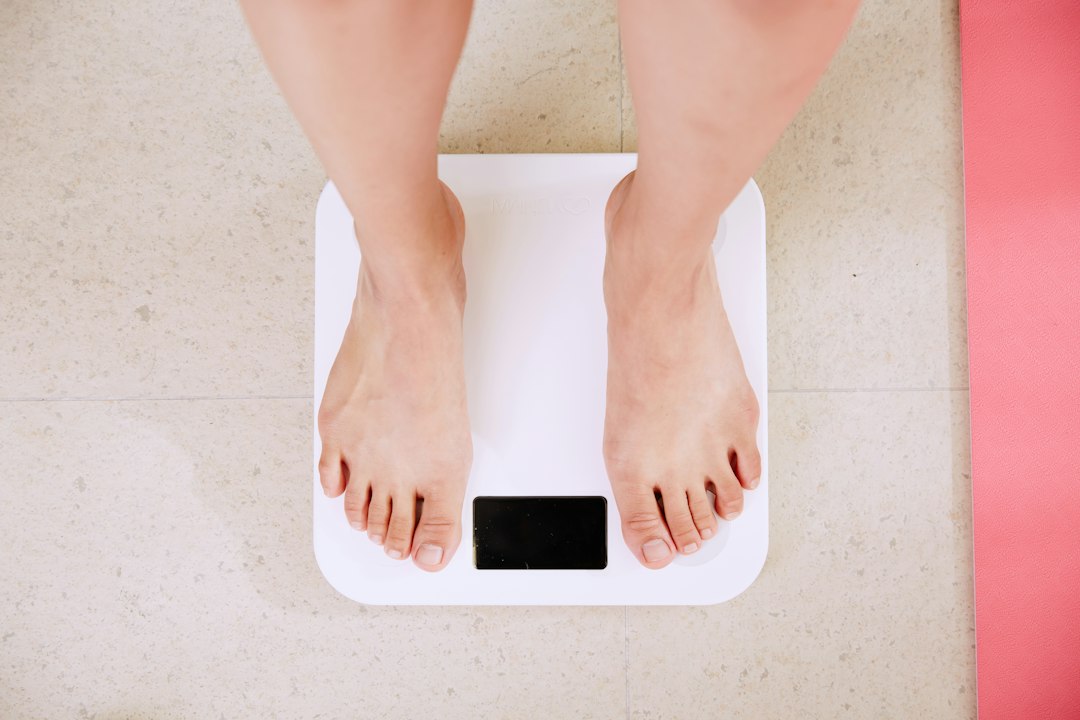
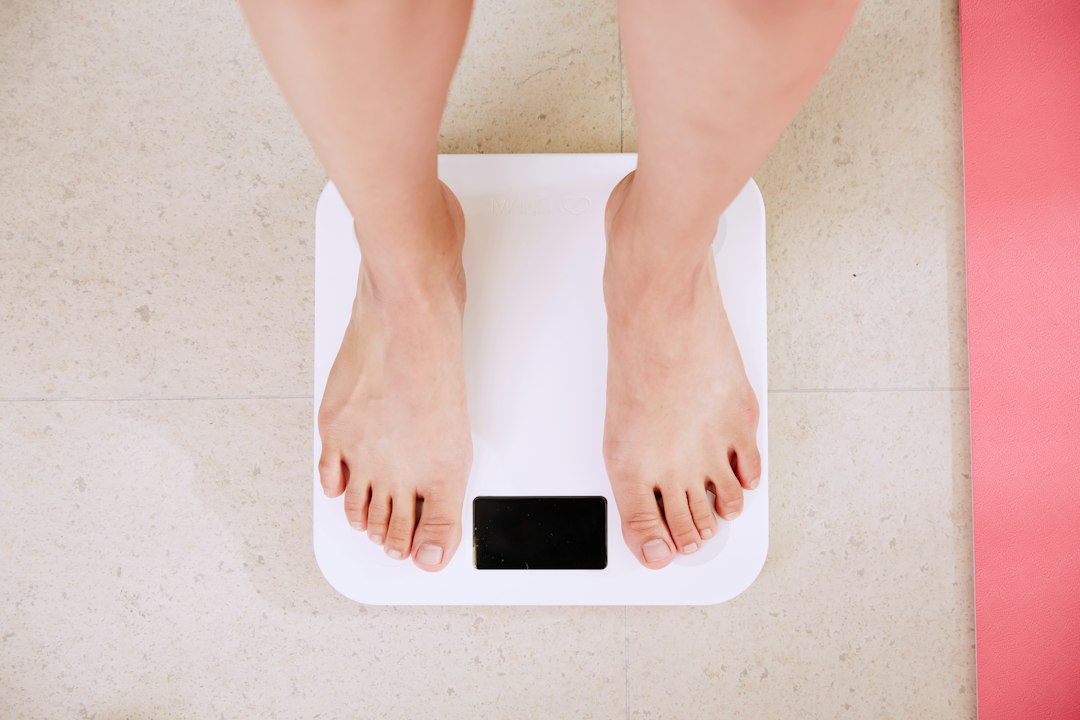
Stepping on the Scale Daily Actually Hides Fat Accumulation

You weigh yourself every morning. You track the trend. You celebrate when the number drops and rationalize when it climbs. The ritual feels rigorous—data-driven, even. But here's what the scale is actually measuring: the total mass of everything inside your body at that specific moment. Muscle. Fat. Water. Bone. Undigested food. Glycogen stores. All of it, combined, compressed into a single number that tells you almost nothing about what's actually changing.
The cruel irony is that daily weighing doesn't just fail to capture fat accumulation—it actively masks it. And for Bay Area professionals who are already doing the work, eating reasonably, exercising consistently, the scale's silence on fat gain might be the most expensive blind spot in their entire health stack.
Why the Scale Feels Scientific but Isn't
The appeal of daily weighing is understandable. You get data. You see trends. You feel accountable. For people who already track their sleep with an Oura Ring, their HRV with a Whoop, and their glucose with a CGM, stepping on the scale fits neatly into a broader self-quantification practice.
But there's a difference between collecting data and collecting the right data. The fitness industry has a description problem: we have more health data than ever—steps, heart rate, sleep stages, calories burned—and almost none of it tells us what our body composition actually looks like. The scale is the oldest version of this problem. It generates a daily number that feels meaningful but is, at best, a blurry proxy and, at worst, actively misleading.
Consider what can cause your scale weight to shift by two to four pounds in a single day without any fat gain or loss whatsoever: sodium intake affecting water retention, carbohydrate consumption replenishing glycogen stores, hydration status, the timing of your last meal, hormonal fluctuations, and even the amount of residual food in your digestive tract. None of these represent actual changes in fat tissue. All of them move the scale.
When you celebrate a two-pound drop on Monday after a low-carb Sunday, you're not celebrating fat loss. You're watching glycogen depletion. When the scale reads three pounds heavier on Wednesday after a sushi dinner, you're not seeing fat gain. You're watching sodium pull water into your tissues. The signal you're trying to read is buried under so much noise that daily weighing frequently trains people to respond to the wrong information entirely.
The Fat Accumulation Problem No Scale Can See
Here's where it gets more serious. Fat accumulation doesn't have to move the scale at all—especially when it's happening alongside muscle loss.
This is the phenomenon known informally as body recomposition in reverse. As people age, particularly after 35, the body becomes more prone to losing lean muscle mass while simultaneously accumulating fat. If those two processes happen at roughly equal rates, the scale stays flat. Weight stable. Everything looks fine. But under the surface, the ratio of fat to lean mass is shifting in the wrong direction. Fat percentage is climbing. Muscle mass is declining. The risk picture is worsening. And the scale, measuring only total weight, has no idea.
This isn't a rare edge case. It's common enough that clinicians have a name for it: sarcopenic obesity. A person can be at a "normal" or even "healthy" weight while simultaneously carrying dangerous levels of visceral fat and clinically low muscle mass. Their BMI looks fine. Their scale looks fine. Their body composition is a crisis hiding behind two reassuring numbers.
Visceral fat—the metabolically active fat stored around your organs in the abdominal cavity—is particularly dangerous and particularly invisible on a standard scale. It's strongly associated with insulin resistance, cardiovascular disease risk, systemic inflammation, and metabolic dysfunction. And it can accumulate steadily for years while your scale weight sits in the range your doctor says is fine. The truth about visceral fat is that lean-looking people aren't exempt—and a scale gives them zero warning.
What a Scale With Body Fat Claims to Solve—And Where It Falls Short
Some people reach for a weight scale with body fat measurement built in—the kind that uses bioelectrical impedance analysis, or BIA. The idea is reasonable: if the scale could tell you both weight and body fat percentage, you'd have more complete information.
In practice, BIA-based scales introduce a new set of problems without solving the core one. Bioelectrical impedance works by sending a small electrical current through the body and measuring resistance, using that resistance to estimate body fat percentage. The estimate depends heavily on hydration status, skin temperature, the time since your last meal, recent exercise, and the specific algorithm the manufacturer used. A study comparing BIA measurements to DEXA—the clinical gold standard—found errors of up to eight percentage points in individual readings. That's not a rounding error. An eight-point swing in body fat percentage is the difference between being in a healthy range and being clinically overfat, or between being classified as lean and being classified as obese.
More importantly, even the most sophisticated consumer BIA scale can't tell you where fat is being stored, can't distinguish between subcutaneous fat and visceral fat, can't measure regional muscle mass in your legs versus your arms versus your trunk, and can't assess bone mineral density. It gives you a single body fat percentage estimate with significant measurement error and no spatial resolution. You still don't know what's actually happening inside your body.
What Clinical Measurement Actually Reveals
DEXA—dual-energy X-ray absorptiometry—is the measurement standard that clinical researchers use when they want to actually know what's happening with body composition. It takes roughly eight minutes, exposes you to less radiation than a cross-country flight, and produces a level of detail that no scale, smart or otherwise, can approximate.
A DEXA scan measures lean mass, fat mass, and bone mineral density across specific regions of your body: arms, legs, trunk, android (belly), and gynoid (hip/thigh) regions separately. It tells you your visceral adipose tissue score—the internal fat around your organs that's most strongly linked to metabolic disease risk. It tells you your appendicular lean mass index, a metric used to assess sarcopenia risk. It tells you whether your muscle mass is distributed symmetrically between your left and right sides. It tells you whether the fat you're carrying is subcutaneous or visceral.
For someone who has been tracking their scale weight for months or years and feeling reasonably good about their trend, a first DEXA scan is often a clarifying moment. The weight story and the body composition story are frequently different stories. Sometimes dramatically so.
People who thought they were losing fat discover they were losing muscle. People who thought their weight was stable discover their fat percentage has been climbing while their lean mass quietly declined. People who thought their belly was soft because of subcutaneous fat discover a visceral fat score that puts them in an elevated risk category. The scale told them everything was fine. The scan tells them what's actually true.
If you've been searching for where to get a DEXA scan near me, or wondering where can I get a DEXA scan for body fat that's actually interpreted by someone who can tell you what the numbers mean for your specific goals, those are exactly the right questions to be asking.
The Data Behind Daily Weighing's Failure
Research on daily weighing consistently shows that its benefits, where they exist at all, are largely psychological—accountability and awareness—rather than physiological. Studies on self-monitoring and weight management find that the behavioral effect of daily weighing works mainly by keeping weight loss salient in people's minds, not by providing accurate feedback about what's actually changing in their bodies.
Meanwhile, the psychological costs of daily weighing are well-documented. Daily weight fluctuations lead to emotional reactivity that has no relationship to actual body composition changes. People restrict food after seeing a high morning weight that was caused by water retention, then overeat after seeing a low morning weight caused by dehydration. The scale ends up driving behavior based on noise, not signal.
For people trying to build muscle while losing fat simultaneously—a goal that DEXA data shows is achievable for most people who train consistently and eat sufficient protein—daily weighing is particularly counterproductive. During periods of successful body recomposition, the scale may not move at all for weeks or months. Someone relying exclusively on the scale for feedback will conclude that nothing is working and abandon the approach. Someone with DEXA data every six to eight weeks will see exactly what's happening: fat declining, lean mass increasing, body fat percentage improving, even as the scale sits stubbornly still.
This is one reason why muscle versus scale weight matters more after 40—the divergence between what the scale reports and what's actually happening inside the body becomes more pronounced with age, not less.
Where Daily Weighing Actively Hides Fat Gain
There are specific scenarios where the scale doesn't just fail to detect fat accumulation—it actively produces false reassurance that allows fat gain to continue undetected.
The muscle-loss-fat-gain swap. When someone does significant amounts of cardio without adequate resistance training or protein intake, they often lose muscle mass while gaining or maintaining fat mass. The scale may show a small decline or stay flat, signaling apparent success. Cardio keeps climbing but belly fat refuses to budge is a pattern Kalos sees regularly in scan data—and the scale gives no warning it's happening.
The water weight disguise. Someone who switches to a higher-carbohydrate diet or increases sodium intake will retain several pounds of water. Their fat mass stays identical. Their scale weight climbs. They panic, restrict, lose water weight, and interpret the subsequent scale decline as fat loss. Meanwhile, their actual fat mass never changed. The cycle repeats. Months pass. Fat accumulates quietly beneath the noise.
The aging metabolism shift. After 35, resting metabolic rate begins declining while hormonal changes—particularly declining testosterone in men and estrogen in women approaching perimenopause—shift the body toward fat storage and away from muscle maintenance. Someone eating the same diet and doing the same workouts they did at 28 may maintain the same scale weight at 42 while their lean mass has declined by five to eight pounds and their fat mass has increased by an equivalent amount. The scale sees nothing. The mirror may show very little. Body recomposition after 45 requires actual measurement to confirm what's working—guessing from the scale is almost always wrong.
The GLP-1 medication blind spot. People using semaglutide, tirzepatide, or other GLP-1 medications often see significant and rapid scale weight loss. What the scale doesn't reveal is that a substantial portion of that weight loss frequently comes from lean mass rather than fat. Research suggests that up to 25 to 40 percent of weight lost on GLP-1 medications can be lean tissue. Someone whose scale drops 30 pounds over six months may have lost 10 to 12 pounds of muscle—damage that shows up as weakness, metabolic rate decline, and eventual weight regain, none of which the scale predicted.
The Right Measurement Cadence
This doesn't mean measurement is wrong. It means the wrong measurement tool, used at the wrong frequency, creates noise rather than signal.
DEXA scans every six to eight weeks provide a cadence that's frequent enough to detect meaningful changes in body composition while avoiding the day-to-day noise that makes daily weighing counterproductive. Within that window, you can see whether your approach is actually working: whether fat is declining, whether lean mass is being preserved or built, whether visceral fat is responding to your nutrition and exercise changes.
Between scans, behavioral tracking—consistency of training, adherence to nutrition targets, sleep quality, protein intake—is more useful than daily weighing because it measures the inputs you control rather than the noisy output you can't interpret. This is the bottom-up approach to body optimization: measure the things that matter, connect them to outcomes, adjust based on what the data actually shows.
If your strength numbers are climbing but you're not sure why your body fat percentage isn't moving, that paradox has a data-based explanation—and it almost never shows up on a scale.
What Kalos Measures and Why It's Different
Kalos uses clinical-grade DEXA scanning at locations across San Francisco, Palo Alto, and San Jose as the measurement foundation for body composition coaching. A scan at Kalos takes about eight minutes and produces a full breakdown of your fat mass, lean mass, bone mineral density, visceral adipose tissue score, and regional body composition—segmented by arms, legs, and trunk.
But the scan is only the starting point. What follows is an in-person analysis with a NASM-certified performance analyst who connects your scan data to your specific goals, your current training, your nutrition patterns, and your lifestyle. The question isn't just "what do these numbers say." It's "what do these numbers tell us about what you should do differently starting this week."
This is the distinction between having data and having actionable intelligence. A DEXA scan from a machine that hands you a printout and sends you home is a description without a prescription. The combination of accurate measurement and expert interpretation is what actually changes behavior—and behavior, done consistently, is what changes body composition.
All Kalos services are HSA and FSA eligible, which means the cost of a scan and coaching program can often be covered with pre-tax dollars. For people already spending on wellness—gym memberships, wearables, supplements, personal training—redirecting some of that spending toward measurement that actually tells you whether the rest of your spending is working is a straightforward optimization.
If you've been asking where can I get a DEXA scan for body fat in the Bay Area, or wondering whether your current approach is actually changing your body composition or just your scale number, those questions have a direct answer. Kalos has completed over 3,000 scans and holds a 4.9-star rating across 500+ reviews—not because the scans alone are remarkable, but because what happens after the scan is where the real work begins.
The scale will keep lying to you. The question is how long you let it.

Ready to measure what matters?
Book your DEXA scan today and stop guessing about your health.