Body Recomposition After 45: Does Your Effort Match Your Results?

You're in the gym four days a week. You're eating more protein than you ever have. You've cleaned up your diet, dialed back alcohol, and you're sleeping better than you were two years ago. By every subjective measure, you're putting in the work.
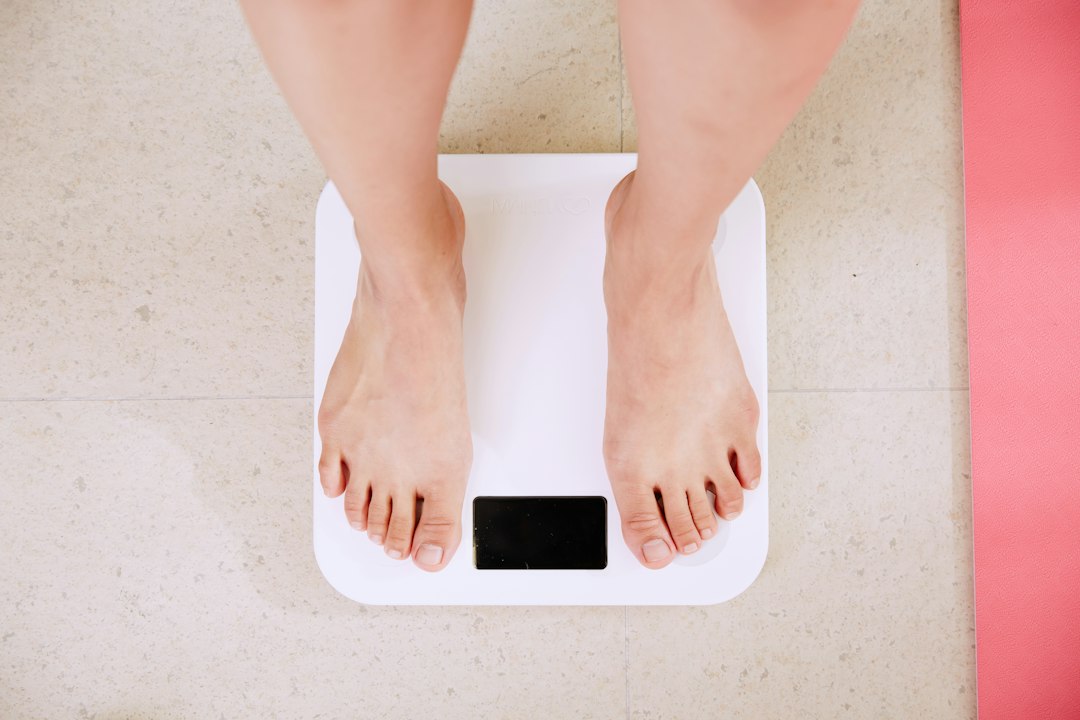
But your clothes fit roughly the same. The mirror hasn't changed much. The scale is down a few pounds, but something feels off — like the results don't quite match the effort.
If you're over 45, this disconnect isn't a motivation problem. It's a measurement problem.
Why Body Recomposition Gets Harder After 45 — And Why That Matters
Body recomposition — simultaneously losing fat and building muscle — is one of the most sought-after fitness outcomes. It's also one of the hardest to achieve and even harder to verify without the right tools.
After 45, several physiological shifts compound the challenge. Testosterone and estrogen levels decline, reducing anabolic signaling. Muscle protein synthesis slows, meaning the same protein intake that built muscle at 30 produces a smaller response at 48. Visceral fat accumulates more readily, even in people who aren't gaining scale weight. And sarcopenia — the age-related loss of skeletal muscle — begins accelerating, often silently.
The result: you can be working harder than ever and still be losing ground on the metrics that matter most for how you look, feel, and age.
None of this is visible in the mirror. None of it shows up on a bathroom scale. And none of it is captured by a fitness tracker, heart rate monitor, or steps count. As we've written in Muscle Loss After 40: What Bay Area Data Actually Shows, the data from thousands of scans paints a clear picture: scale weight is a deeply unreliable proxy for what's actually happening inside your body.
The Description Problem Nobody Talks About
The fitness industry has given you more data than any previous generation. Wearables track your HRV, sleep stages, recovery scores, calories burned, and VO2 max estimates. Apps log your workouts and meals. But here's the problem: most of that data is describing the inputs, not the outputs.
How many steps you took tells you something. How much lean mass you gained or lost tells you something fundamentally more important. These are different categories of information.
Without clinical-grade body composition data, you're running an experiment with no readout. You're changing variables — diet, training, sleep, supplementation — but you have no way to know which ones are driving results and which ones are noise.
This is the description problem. You have tons of fitness data, but it's the wrong data.
A DEXA scan for body composition solves this directly. It gives you precise measurements of fat mass, lean mass, bone mineral density, and visceral adipose tissue — segmented by body region — so you can see exactly what's happening, not what you hope is happening.
What Body Recomposition Before and After Actually Looks Like in the Data
Here's something the fitness industry rarely shows you: authentic body recomposition before and after results don't always look dramatic on the surface. The scale might barely move. The mirror might look similar. But inside the data, the transformation is real and clinically significant.
A member over 45 who spends six months in a structured program might:
- Lose 6–9 lbs of fat mass while gaining 3–4 lbs of lean mass
- Show a net scale weight change of only 2–3 lbs
- Reduce visceral adipose tissue by 15–25%
- Improve appendicular lean mass index (ALMI) — the key sarcopenia risk metric — by a clinically meaningful margin
Without DEXA, that person looks at the scale, sees a modest number, and concludes their program isn't working. With DEXA, they see exactly what changed — and why the effort was worth it.
Conversely, DEXA also reveals when a program that feels productive isn't delivering results. When muscle gains stall, the scan exposes the real reason — whether it's insufficient training stimulus, inadequate protein, or hormonal factors that need to be addressed.
The 80/16/3/1 Framework: Are You Spending Your Energy in the Right Places?
One of the most common reasons effort doesn't match results after 45 is misallocation. People invest enormous time and money in the wrong tier of the fitness hierarchy.
Think of exercise effectiveness as a pyramid:
- 80% of results come from consistency — are you actually showing up to train? This single variable dominates everything else.
- 16% comes from programming — sets, reps, rest periods, frequency, progressive overload.
- 3% comes from variations — kettlebells versus dumbbells, cable flyes versus dumbbell flyes.
- 1% is highly individual — cold plunges, specific supplements, advanced recovery protocols.
The same logic applies to nutrition:
- 80% is calories and macros — the foundation that drives fat loss and muscle retention.
- 16% is food quality — fiber versus sugar, processed versus whole foods, saturated versus unsaturated fats.
- 3% is timing — protein uptake windows, intermittent fasting, carb cycling.
- 1% is highly dependent — ashwagandha, specific supplements, highly personalized interventions.
A significant portion of people over 45 who feel like they're doing "everything right" are actually spending most of their cognitive bandwidth on the 3% and 1% tiers — obsessing over meal timing, supplement stacks, or fancy training variations — while the 80% tier (consistency and caloric structure) has gaps they're not fully aware of.
DEXA data makes this visible. If your lean mass hasn't moved after 90 days of training, the question isn't whether you need a better pre-workout supplement. The question is whether your training volume, progressive overload, and protein intake are actually sufficient — and a 90-day DEXA result gives you the evidence to answer that honestly.
The Three Dimensions of Body Recomposition After 45
At Kalos, we think about health and fitness goals through three interconnected lenses: Aesthetics, Longevity, and Performance. After 45, all three become more interdependent — and more measurable.
Aesthetics is the most obvious: body fat percentage, muscle mass, and muscle symmetry. But what most people don't realize is that after 45, the aesthetic changes you're chasing are driven by the same physiological mechanisms as the longevity outcomes you should care about.
Longevity metrics become particularly important in this age range. Visceral adipose tissue (VAT) — the fat stored around your organs — is a stronger predictor of metabolic disease risk than subcutaneous fat. Bone mineral density begins declining, especially in women approaching or past menopause. Appendicular lean mass index (ALMI) predicts functional independence decades from now. These aren't abstract numbers — they're the metrics that determine whether you're building a body that performs well at 65 and 75, not just today. Read more about why tracking sarcopenia risk before symptoms appear changes the entire equation.
Performance metrics — resting metabolic rate, cardiovascular capacity, strength benchmarks — tell you whether your body is becoming more capable over time, not just leaner. After 45, maintaining a high resting metabolic rate is directly tied to lean mass preservation. Lose muscle, and your metabolism slows in a compounding cycle that makes fat loss progressively harder.
The good news: for most people in this age range, improving in any one direction tends to improve all three. Building lean mass improves both aesthetics and ALMI. Reducing visceral fat improves both longevity markers and how you look. This is the phase where measurement pays the highest dividend, because data-driven adjustments produce results across all three dimensions simultaneously.
Why "Top-Down" Fitness Advice Fails After 45
The fitness industry operates top-down. It picks a methodology — keto, Pilates, Zone 2, intermittent fasting, high-intensity intervals — and applies it to everyone. The implicit promise is: follow this protocol and results will follow.
This approach fails broadly. After 45, it fails more predictably, because individual variation in hormones, metabolic rate, training history, and recovery capacity becomes substantially wider. What works for a 32-year-old following the same program may produce entirely different results for a 48-year-old with different hormonal context, different lean mass baseline, and different recovery capacity.
The alternative is bottom-up: start with your data, identify what's actually happening in your body, and select or adjust the method based on what the evidence says is working for you specifically. If after 60 days of interval training your visceral fat hasn't moved and your lean mass is flat, that's information. As our piece on whether interval training actually delivers fat loss explores — the program might need modification, the inputs might need recalibration, or the approach might not be the right fit for your physiology.
This is not about blaming the modality. It's about measuring outcomes and adjusting accordingly. Method agnosticism grounded in outcome data is how real body recomposition happens after 45.
What a DEXA Scan for Body Composition Actually Tells You
A DEXA scan for body composition is a dual-energy X-ray absorptiometry scan — the same technology used in clinical research and medical settings — that takes approximately 10 minutes and produces a detailed map of your body's three compartments: lean mass, fat mass, and bone mineral density.
Unlike bioelectrical impedance (BIA) scales, which estimate body composition based on electrical resistance and are notoriously sensitive to hydration levels, DEXA uses differential X-ray absorption to produce measurements accurate to within 1–2% — consistent across scans and not affected by whether you drank water this morning. Dehydration can hide fat gain on BIA scales; DEXA eliminates that confound entirely.
A DEXA report for body composition includes:
- Total body fat percentage and fat mass in pounds
- Lean mass by region (arms, legs, trunk) — revealing muscle asymmetries that indicate injury risk or training imbalances
- Visceral adipose tissue score — the clinically significant fat around your organs
- Bone mineral density and T-score — critical for anyone over 45, especially women
- Appendicular lean mass index (ALMI) — your age- and sex-adjusted muscle mass relative to height, the primary sarcopenia risk metric
This is not information your annual physical provides. Standard bloodwork tells you about biomarkers in your blood. A DEXA scan tells you about the composition of your body — the tissue-level reality that drives how you look, how you perform, and how you'll age. As we've explored in why professionals use DEXA to optimize longevity, the scan is the foundation for decisions that actually move the needle.
The Prescription Problem: Data Without Guidance Is Just Numbers
Getting a DEXA scan and receiving a PDF report is a starting point, not a solution. Data without interpretation and a clear action plan doesn't change behavior — and behavior is what changes your body.
The prescription problem is the second challenge the fitness industry fails to solve. Even when people have good data, they don't know what to do with it. Which variables to change. In what order. With what priority. How to connect their behaviors to their outcomes in a way that produces actionable adjustments.
This is where coaching transforms a data point into a program. At Kalos, every scan is followed by an in-person analysis session with a performance analyst — NASM-certified, with backgrounds spanning elite athletics, data science, and strength coaching. The analyst connects your X variables (training, nutrition, sleep, stress) to your Y variables (the DEXA metrics) and tells you specifically what to change, why, and how to measure whether the change worked.
Monthly follow-up scans create the feedback loop that makes this actionable. Instead of a single data point, you build a trendline. Instead of guessing whether your program is working, you see it in the numbers — fat mass trending down, lean mass trending up, visceral fat declining, ALMI improving. The 60-day retest is often where the real clarity arrives: this is when you can see definitively whether your plan is working or whether it needs to change.
Common Patterns We See After 45 in the Scan Data
After thousands of scans across our Bay Area locations, certain patterns appear consistently in members over 45:
The "scale stable, muscle declining" pattern. Scale weight hasn't changed in two years, but lean mass has dropped 4–6 lbs and fat mass has increased by the same amount. This is classic sarcopenic obesity — body weight stays constant while body composition deteriorates. The person feels fine but is moving in the wrong direction on every longevity metric.
The "cardio-heavy, muscle-light" pattern. Someone running four to five days per week or taking daily cycling classes has strong cardiovascular fitness but inadequate lean mass for their frame. Their ALMI is below the threshold for their age group. Fat mass — particularly visceral — remains elevated despite high caloric expenditure. As we've written about what spinning classes actually do to your muscle, cardio volume without resistance training stimulus often fails to produce the body composition outcomes people expect.
The "high effort, wrong inputs" pattern. Someone training six days per week but not eating enough protein to support muscle protein synthesis. Their lean mass is flat or declining despite consistent training. The fix isn't more training — it's recalibrating the nutrition inputs. Protein targets mean nothing without measuring actual muscle gains — the scan tells you whether your intake is actually translating to tissue.
The "hidden visceral fat" pattern. Someone with a normal or near-normal BMI, relatively low subcutaneous fat, but elevated visceral adipose tissue. This is the pattern that carries the highest metabolic disease risk and is completely invisible without imaging. The truth about visceral fat is that lean-looking people can be at significant risk — and the only way to know is to measure it.
What Changes When You Have Real Data
There's a psychological dimension to measurement that's worth naming directly. When you're working hard without visible results, the natural response is doubt — about your program, your body, your ability to change. That doubt erodes motivation. Without data, the feedback loop is either the scale (unreliable) or the mirror (subjective and slow-moving).
When you have clinical-grade data, the feedback loop changes. You see that your fat mass is down 3.2 lbs over 60 days even though the scale barely moved — because you gained 1.8 lbs of lean mass simultaneously. You see that your visceral fat score dropped meaningfully. You see that the training and nutrition adjustments from your last session are actually working.
That data changes behavior. Not because numbers are motivating in the abstract, but because evidence that something is working creates commitment to keep doing it. Evidence that something isn't working creates the clarity to change. Both outcomes are better than operating in the dark.
This is why understanding the difference between muscle and scale weight after 40 isn't just academic — it fundamentally changes how you interpret your progress and how consistently you stay the course.
Body Recomposition After 45 Is Possible. But It Requires a Different Approach.
The people who successfully recompose after 45 aren't working harder than everyone else. They're working smarter — which means they've solved the measurement problem first.
They know their actual body fat percentage, not an estimate from a consumer scale. They know their lean mass by region and whether it's trending up. They know their visceral fat score and whether their interventions are moving it. They know their ALMI relative to age-matched norms, and they know whether sarcopenia risk is rising or falling.
With that data as the foundation, every programming and nutrition decision becomes a testable hypothesis. You adjust a variable, you wait 60 days, you rescan, you see what happened. That's the feedback loop that produces real, sustained body recomposition — not in spite of the physiological challenges of aging, but by accounting for them directly.
Kalos serves members across San Francisco, Palo Alto, and San Jose with clinical-grade DEXA scanning and personalized performance coaching. All services are HSA/FSA eligible. The first scan is the starting point — the in-person analysis session is where the real work begins.
If your effort deserves better results, the first step is knowing exactly where you stand.

Ready to measure what matters?
Book your DEXA scan today and stop guessing about your health.