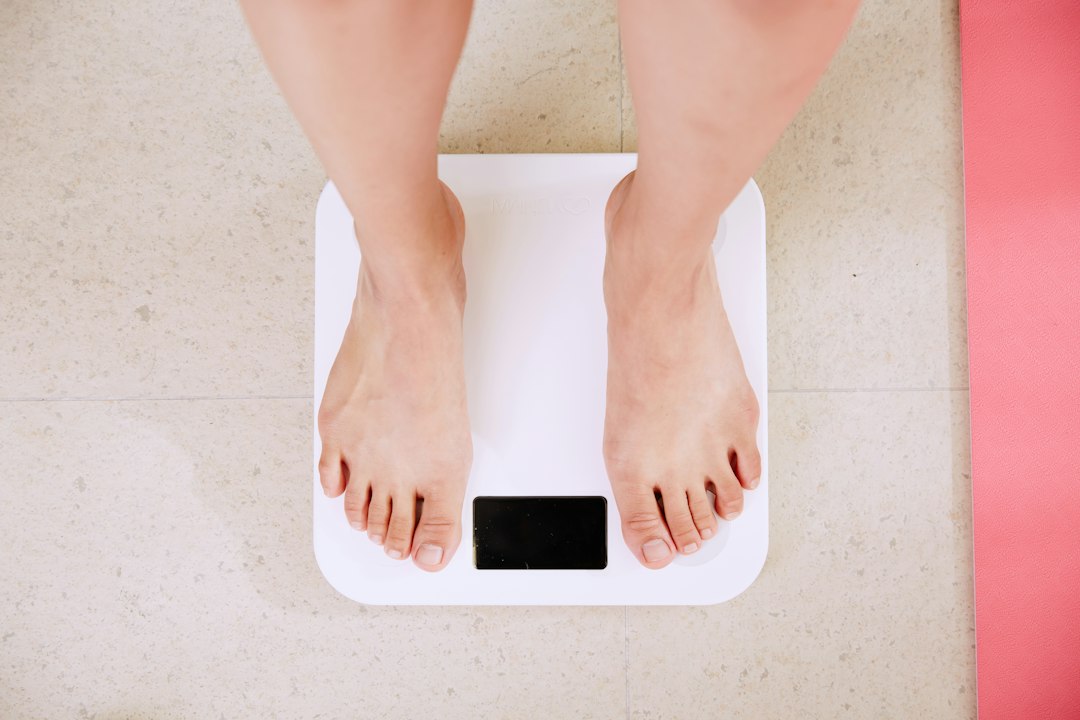
Alcohol-Free January Done—Did Your Body Fat Actually Drop?

You made it through January without a drink. No wine with dinner, no weekend beers, no post-work cocktails. You slept better, felt sharper, and the scale moved down a few pounds. It felt like a reset.
But here's the question worth asking honestly: did your body fat actually drop? Or did your weight shift for reasons that have nothing to do with losing fat?
That distinction matters more than most people realize—and it's exactly the kind of question that a DEXA scan is built to answer.
Why the Scale Tells You Almost Nothing After a Month Off Alcohol
Alcohol carries calories—about 7 per gram, more than carbohydrates or protein—so cutting it out does create a meaningful deficit for most people. But the scale response after Dry January is often misleading in both directions. When you stop drinking regularly, your body sheds water. Alcohol suppresses a hormone called ADH (antidiuretic hormone), which normally tells your kidneys to retain water. When ADH rebounds after you stop drinking, your hydration status normalizes—and for chronic drinkers or heavy weekend drinkers, this means your body holds more water, not less, in the first one to two weeks of sobriety. The scale can actually go up temporarily before it starts moving down. Then, as the month progresses, the scale typically drops. But what dropped? Water weight, glycogen stores, actual fat, or some combination of all three? The number alone cannot tell you. And as we've written before, stepping on the scale daily actually hides fat accumulation in ways that consistently mislead people who are trying to make real progress.What Alcohol Actually Does to Body Composition
To understand what stopping alcohol does, it helps to understand what continued alcohol consumption does to your body composition over time. First, alcohol is calorie-dense and nutritionally empty. Those calories don't contribute to muscle protein synthesis, glycogen replenishment, or any meaningful recovery process. They just exist in your caloric ledger, displacing nutrients that would otherwise support lean tissue. Second, alcohol suppresses testosterone and growth hormone—both critical signals for muscle maintenance and repair. Even moderate drinking blunts the anabolic hormonal environment that strength training is supposed to create. If you're training hard and drinking regularly, you're working against yourself in ways that don't show up in a gym mirror until months later. Third, alcohol disrupts sleep architecture, specifically suppressing REM sleep. Since much of the muscle repair and hormonal signaling that drives body recomposition happens during deep sleep, chronic alcohol use quietly degrades your results even when your training and nutrition look solid on paper. All of this means that a month of abstinence potentially does much more than just remove empty calories. It may improve hormonal signaling, enhance recovery quality, and create conditions that actually support body recomposition—not just weight loss. But "potentially" is doing a lot of work in that sentence. Whether it actually happened for you depends on factors specific to your body, your baseline alcohol intake, your training, your nutrition, and your sleep. The only way to know is to measure.How Accurate Are DEXA Scans for Body Fat?
This is one of the most common questions people ask when they start thinking about clinical measurement. It deserves a direct answer. DEXA (Dual-Energy X-ray Absorptiometry) is the gold standard for body composition measurement in clinical and research settings. It uses two low-dose X-ray beams at different energy levels to differentiate between bone mineral density, lean soft tissue (muscle), and fat mass—including the distinction between subcutaneous fat (the fat you can pinch) and visceral adipose tissue (the dangerous fat packed around your organs). The margin of error for DEXA is approximately one to two percent body fat under standardized conditions—meaningfully better than bioelectrical impedance scales (which can swing by three to eight percent based on hydration alone), skinfold calipers (which are operator-dependent and notoriously inconsistent), or DEXA's main consumer alternative, bod pods (which are reasonably accurate but don't provide regional breakdowns or visceral fat data). For tracking changes over time—which is the whole point after something like Dry January—DEXA's precision is its strongest asset. When you scan before and after a defined intervention, you get a reliable signal of what actually changed, broken down by region, tissue type, and metabolic risk.What Scans Actually Show After a Month Without Alcohol
We've written about this specific question before, in a piece examining why Bay Area professionals are using DEXA scans to accurately measure fat loss after cutting alcohol—and separately in a more detailed look at what scanning before and after alcohol removal actually reveals about fat reshaping. The pattern that tends to emerge is nuanced and worth understanding. People who eliminate alcohol for thirty days and make no other intentional changes to diet or exercise typically see modest fat loss—often in the range of one to two pounds of actual fat mass, sometimes less. That sounds anticlimactic compared to what the scale shows. But a pound of actual fat loss is meaningful, and it's real. It's not water. It's not muscle. DEXA confirms it. The more significant finding for many people is what happens to visceral fat. Because alcohol preferentially promotes visceral adipose tissue accumulation—partly through its effect on cortisol, partly through liver fat dynamics—even a short abstinence period can produce measurable reductions in VAT that don't necessarily show up as visible body changes. Visceral fat is the metabolically active, health-critical fat that standard weight tracking simply cannot detect. For people who were drinking at higher levels—say, ten or more drinks per week—the changes tend to be more pronounced. For people who were already light drinkers, the changes after thirty days are often more modest. The third pattern that scans reveal: muscle mass is often unchanged or slightly improved after Dry January, especially for people who were training consistently. The removal of alcohol's anti-anabolic effect, combined with better sleep quality, sometimes produces a small but real uptick in lean mass—even without deliberate changes to training or protein intake. That's the compounding benefit that most Dry January participants never know they experienced.Where Can You Get a DEXA Scan for Body Fat in the Bay Area?
If you're searching for body composition analysis near you in the Bay Area, or wondering where you can get a DEXA scan for body fat, Kalos operates three locations across the region: San Francisco, Palo Alto, and San Jose (Pruneyard). What differentiates a Kalos scan from a standalone scan-and-go service is what happens after the scan. Every session includes an in-person analysis with an NASM-certified performance analyst—coaches who come from backgrounds in elite athletics, data science, and clinical performance. They don't hand you a printout and send you home. They walk through your results in detail, connecting your specific numbers to your specific behaviors and goals. That's the description problem and the prescription problem, solved together. Most fitness tracking gives you data you don't know what to do with. Kalos connects your inputs—what you eat, how you train, how you sleep—to your output metrics, and tells you what to actually change. All services are HSA and FSA eligible, which matters for Bay Area professionals who maintain those accounts for qualified medical expenses.The Bigger Picture: Dry January as a Starting Line, Not a Finish Line
The most useful thing Dry January can do for your health isn't the thirty days of abstinence itself. It's the baseline it gives you—a before-and-after that, if measured properly, reveals how your body actually responds to a specific, well-defined change. That information is worth something well beyond January. If your scan shows that eliminating alcohol for thirty days produced a measurable reduction in visceral fat, that's a strong signal about alcohol's contribution to your current body composition. It gives you a real-world data point to weigh against the social calculus of drinking. It's not a judgment. It's a number. And if your scan shows the change was minimal despite feeling dramatically better, that's useful too—it suggests the subjective improvements in sleep, energy, and cognitive clarity are real and worth maintaining, even if the fat loss effect was smaller than you hoped. This is exactly the framework Kalos uses with every member: connect behavior to outcome, measure the response, adjust accordingly. Not top-down prescription—"do keto, do Dry January, do Zone 2"—but bottom-up iteration driven by your actual data. If you finished Dry January feeling better but still guessing about whether it actually changed your body composition, that uncertainty is solvable. Retesting after a defined intervention is exactly how you find out whether your plan is working—or whether the feeling of progress is running ahead of the reality. The scan takes about ten minutes. The analysis takes another twenty. What you learn about your own body tends to be useful for a lot longer than that.
Ready to measure what matters?
Book your DEXA scan today and stop guessing about your health.