Muscle Versus Scale Weight: What Matters More After 40?

You've been consistent. You're eating reasonably well, hitting the gym three or four times a week, maybe even watching your calories. But the scale hasn't moved much—or worse, it has moved, and you're still not sure if what you're doing is actually working.
This is one of the most common frustrations we hear at Kalos from adults over 40. And the problem isn't your discipline. The problem is the metric you're using to measure success.
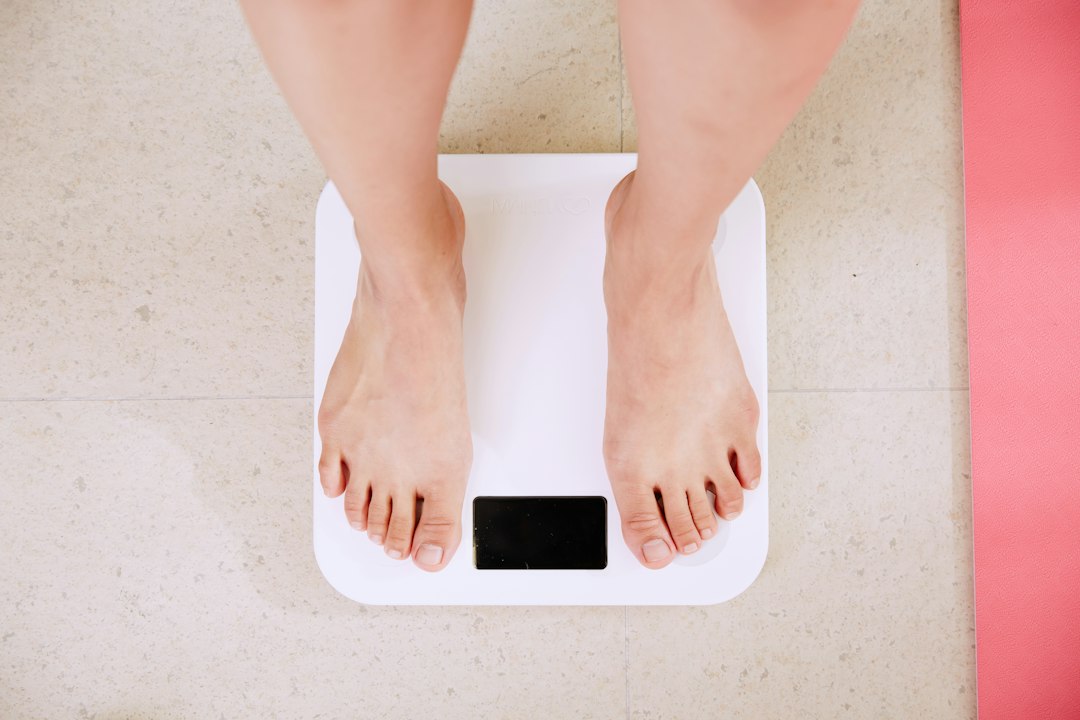
Scale weight, on its own, is one of the least useful numbers you can track after 40. Here's why—and what to measure instead.
What the Scale Actually Measures
Your scale weight is a sum total of everything in your body: muscle, fat, bone, water, organ tissue, the lunch you had two hours ago, the sodium you had last night. It doesn't distinguish between any of them.
This means you can lose three pounds of muscle and gain three pounds of fat and your scale will report zero change. You can also gain two pounds of lean muscle while losing two pounds of fat and see nothing move. In both cases, your health trajectory is completely different—but the scale reports the same number.
After 40, this problem compounds. Your body composition naturally begins to shift. Muscle becomes harder to build and easier to lose. Fat accumulates more readily, especially around the midsection. Hormonal changes—declining estrogen, testosterone, and growth hormone—accelerate this process. The result is that two people who weigh exactly the same at 45 can have radically different metabolic health, injury risk, and long-term outcomes depending on how much of that weight is lean mass versus fat.
This is why relying on scale weight after 40 isn't just unhelpful. It can actively mislead you.
Why Muscle Mass Is the Metric That Actually Matters
Muscle is metabolically active tissue. The more of it you have, the more calories you burn at rest, the more insulin-sensitive your cells become, the more effectively your body regulates blood sugar, and the more resilient you are to injury and disease. Research consistently links higher appendicular lean mass (the muscle on your arms and legs) to longer healthspan, lower cardiovascular risk, and better functional independence well into your 70s and 80s.
After 40, adults who aren't actively working to preserve and build muscle lose somewhere between 3% and 8% of their lean mass per decade—a condition called sarcopenia. By 50, that rate often accelerates. And because the scale doesn't flag this loss, most people don't realize it's happening until the downstream consequences show up: slower metabolism, increasing body fat despite no change in diet, reduced strength, and higher fracture risk.
We've published data on this from our own Bay Area scans. The numbers are striking—and they don't care whether you feel healthy or not.
The critical shift in mindset after 40 is this: stop asking "how much do I weigh?" and start asking "how much of what I weigh is muscle?"
The Problem With Most Fitness Tracking After 40
The fitness industry is flooded with tools that give you data. Wearables track steps, heart rate, sleep stages, HRV. Apps log calories and macros. Smart scales estimate body fat using bioelectrical impedance.
But there's a fundamental problem: most of this data is the wrong data—or at best, incomplete data. Bioelectrical impedance scales, for example, can swing 3–5% in body fat readings based on hydration alone. Dehydration alone can mask real fat gain or make you appear leaner than you are. Steps don't tell you whether you're building or losing muscle. Calorie tracking doesn't tell you what's actually happening inside your body.
Without a gold-standard measurement, you're flying blind. You're making decisions—adjusting your diet, changing your training, adding supplements—without knowing whether those decisions are actually moving the right variables in the right direction.
This is what we call the description problem at Kalos. You might have plenty of data. But if it's the wrong data, it can't tell you what's actually happening to your body composition. And if you can't accurately describe what's happening, you certainly can't prescribe the right solution.
What DEXA Scanning Reveals That Nothing Else Does
DEXA (dual-energy X-ray absorptiometry) is the clinical gold standard for body composition measurement. A scan takes about seven minutes and produces a precise breakdown of your lean mass, fat mass, and bone mineral density—segmented by body region. Left arm, right arm, left leg, right leg, trunk, android (belly), gynoid (hip).
This level of detail changes what you know about your body. You don't just learn your overall body fat percentage. You learn where your fat is concentrated, whether your muscle is distributed symmetrically, how your visceral adipose tissue (the dangerous fat wrapped around your organs) compares to healthy reference ranges, and how your appendicular lean mass index (ALMI) stacks up against age- and sex-matched norms—one of the most reliable early indicators of sarcopenia risk.
For people over 40, the most important numbers on a DEXA scan are often not the ones they expected. Total weight is almost irrelevant. ALMI, visceral fat score, and regional lean mass are the metrics that tell you whether your current trajectory is heading toward strength and independence—or quietly toward fragility.
If you're wondering where to get a DEXA scan near me in the Bay Area, Kalos has locations in San Francisco, Palo Alto, and San Jose. Every scan includes an in-person analysis session with a NASM-certified performance analyst who walks you through exactly what your numbers mean and what to do about them.
For a deeper look at what the numbers on your results page actually mean, our guide on how to read a DEXA scan and what your results show is a good place to start.
How to Read a DEXA Scan: The Numbers That Matter Most After 40
When you look at your DEXA results, here's where to focus your attention if you're over 40:
Appendicular Lean Mass Index (ALMI): This measures the muscle on your arms and legs divided by your height squared. Low ALMI relative to age- and sex-matched norms is an early indicator of sarcopenia risk—often long before any visible weakness appears. Tracking sarcopenia risk before symptoms appear is one of the most powerful things DEXA enables.
Visceral Adipose Tissue (VAT): This is the fat stored deep in your abdominal cavity around your organs. It's invisible in the mirror and undetectable on a regular scale, but it's strongly associated with cardiovascular disease, type 2 diabetes, and metabolic dysfunction. Many people who look lean—or who have a "normal" BMI—carry dangerously elevated visceral fat. Your scale says healthy while your visceral fat tells a different story.
Bone Mineral Density (BMD): After 40, bone density begins to decline. For women, this accelerates dramatically around perimenopause. DEXA provides T-scores and Z-scores that show where you stand relative to peak bone mass and to age-matched peers. Catching early decline means you can act on it. Missing it means you find out when something breaks.
Regional Lean Mass and Symmetry: DEXA shows whether you have meaningful muscle imbalances between sides of your body—left versus right, upper versus lower. Significant asymmetries are often injury predictors and training blind spots that no mirror or scale will ever reveal.
Body Fat Percentage (Regional): Total body fat percentage matters, but where that fat lives matters more. Android-to-gynoid ratio and trunk fat percentage give a much more complete picture of metabolic risk than a single number.
Muscle Building Over 40: What the Data Says Is Actually Possible
Here's the good news that often gets buried under a lot of pessimistic messaging about aging: building muscle after 40 is absolutely possible. It requires more intentionality than it did at 25, but the biological machinery is still there.
What the research shows—and what we see consistently in our scan data at Kalos—is that adults over 40 who follow a well-structured resistance training program combined with adequate protein intake can build meaningful lean mass in as little as 12 weeks. The variables that matter most are not what most people think.
Based on our framework for what actually drives results:
For exercise, consistency is 80% of the equation. Are you doing resistance training with sufficient frequency and load? Yes or no. That single variable dwarfs programming sophistication, equipment choice, and everything else. Three to four sessions per week of progressive resistance training, done consistently, will outperform any optimized program you only follow for three weeks.
The next 16% comes from programming quality: progressive overload (incrementally increasing the challenge over time), adequate training volume, appropriate rest periods, and targeting all major muscle groups with compound movements. This matters, but only on top of consistency.
For nutrition, protein quantity is the 80%. Most adults over 40 who aren't building muscle as expected are under-eating protein, often significantly. Research supports targets in the range of 0.7–1.0 grams per pound of body weight per day for muscle building. Total calorie intake matters too. You cannot build muscle in a meaningful calorie deficit over the long term.
The timing, supplementation, and optimization layers—protein timing around workouts, creatine, sleep protocols—all matter, but they sit on top of this foundation. Trying to optimize the 1% before you've nailed the 80% is the single biggest mistake we see in the clients who come to us frustrated that nothing is working. Protein targets mean nothing without measuring actual muscle gains.
DEXA scanning is what closes the feedback loop. You can train consistently, eat well, and still not know if the approach is actually working for your specific body until you measure. Monthly scans at Kalos let you see whether your lean mass is trending up, whether your fat is being selectively lost, and whether the program needs adjustment—or whether it's working exactly as intended and you simply need to trust the process.
The Dangerous Myth of "Healthy Weight"
One of the most persistent misconceptions we encounter is the idea that if your scale weight is in a "normal" range, your body composition must be acceptable. This is not true—and after 40, it's increasingly dangerous to believe.
A 47-year-old who weighs 165 pounds might have 32% body fat and critically low lean mass. Another 47-year-old at the exact same weight might have 18% body fat and robust muscle mass. Their scale weights are identical. Their metabolic health, injury risk, and aging trajectory are not even close to comparable.
BMI has the same problem at scale. It correlates weight to height and produces a number that tells you almost nothing about how much of your weight is muscle versus fat. It cannot detect visceral fat. It cannot detect sarcopenia. It cannot tell you whether your bone density is declining. Bay Area professionals are increasingly moving away from BMI as a meaningful health marker—because DEXA gives them the full picture BMI was never designed to provide.
There's also the "skinny fat" phenomenon—people who appear lean in the mirror and have a normal or even low BMI, but carry a disproportionate amount of body fat relative to muscle. This pattern is particularly common in people who do primarily cardio-based exercise without resistance training, and it becomes increasingly common with age as muscle loss accelerates while weight stays flat. The hidden danger of skinny fat is well documented in our Bay Area scan data.
What a Data-Driven Approach to Muscle Building After 40 Actually Looks Like
At Kalos, we work with a significant number of clients in their 40s, 50s, and 60s who come in convinced they've been doing everything right—and whose DEXA results tell a more complicated story.
The pattern we see most often: significant cardio volume, inconsistent resistance training, moderate protein intake, and a scale weight that has barely changed in years. The DEXA reveals that over the same period, lean mass has been quietly declining while fat mass has been increasing—sometimes dramatically. The scale masked the entire shift.
Once the data is on the table, the prescription becomes clear. We're not guessing at a methodology and hoping it works. We're looking at your specific ALMI, your visceral fat score, your regional lean mass, your symmetry data, and your resting metabolic rate—and building a training and nutrition approach around what your body actually needs, not what worked for someone else or what's trending on social media.
This is the bottom-up approach: measure first, prescribe second, iterate based on what the data shows. If your lean mass goes up month over month and your visceral fat goes down, the approach is working. If it isn't, we adjust. The data tells us what works for you specifically—which is the only answer that actually matters.
For adults who are already noticing the effects of muscle loss after 40, Bay Area scan data on what's actually happening is a useful baseline for understanding where you stand. And if you've been experiencing a strength training plateau despite consistent effort, your body composition data likely explains why.
The Measurement Layer Changes Everything
There's a reason Kalos has completed more than 3,000 scans and maintains a 4.9-star rating across 500+ Google reviews. It's not because DEXA scans are a novelty. It's because seeing your actual body composition data—for the first time, often after years of training and dieting by feel—changes the decisions you make and the results you get.
The clients who see the most dramatic transformations after 40 are almost never the ones doing the most complicated things. They're the ones who finally got accurate data about where they were starting from, built a consistent plan around the metrics that actually matter, and showed up month after month to measure whether it was working.
If you're over 40 and still using the scale as your primary measure of progress, you're working with incomplete information. The number on the scale can't tell you whether you're gaining muscle or losing it. It can't tell you whether your visceral fat is climbing. It can't tell you whether your bone density is declining silently in the background.
The metrics that tell you those things are available. You just need to measure them.
Kalos offers DEXA scans at locations in San Francisco, Palo Alto, and San Jose. All services are HSA/FSA eligible. Book a scan, get your data, and find out what's actually happening inside your body after 40—not what the scale is guessing.

Ready to measure what matters?
Book your DEXA scan today and stop guessing about your health.