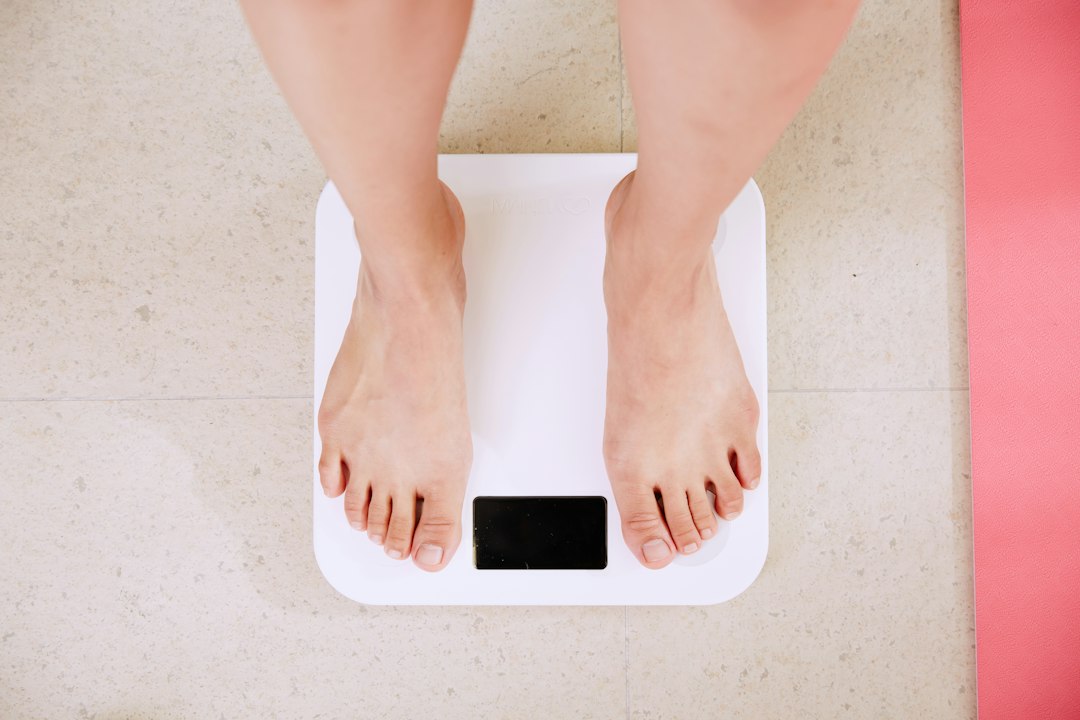
Scale Says Healthy—Your Visceral Fat Tells a Different Story

You step on the scale. The number looks fine. Your doctor says your BMI is in the healthy range. You exercise a few times a week. By every surface-level metric, you're doing okay.
But here's what none of those measurements tell you: how much fat is packed around your internal organs.
Visceral fat—the deep abdominal fat that surrounds your liver, pancreas, and intestines—is metabolically active in ways that subcutaneous fat (the kind you can pinch) simply isn't. It drives insulin resistance, systemic inflammation, cardiovascular risk, and hormonal disruption. And unlike the fat you can see in a mirror, it's completely invisible without clinical-grade imaging.
If you've never had a visceral fat scan, you don't actually know one of the most important numbers in your health profile.
Why the Scale Is the Wrong Tool for This Job
The scale measures gravitational pull. That's it. It tells you nothing about what your body is made of—how much is muscle, how much is subcutaneous fat, and how much is the visceral fat wrapping your organs.
Two people can weigh exactly the same and have radically different visceral fat levels. A 165-pound woman who strength trains regularly and eats well may carry almost no visceral fat. A 165-pound woman who is sedentary, under chronic stress, and eating a diet high in processed foods and alcohol may have a visceral fat score that puts her in a high-risk category—even if she looks roughly the same in clothes.
This is sometimes called normal-weight obesity—a condition where body weight appears healthy but body composition tells a completely different story. It's far more common than most people realize, particularly among Bay Area professionals who eat reasonably well but carry chronic stress, sleep debt, and sedentary desk hours as a baseline.
What Is a Visceral Fat Score—and What Does "Visceral Fat 6 Female" Actually Mean?
When you get a DEXA scan, one of the outputs is a visceral adipose tissue (VAT) measurement. This is reported in grams or as a volume estimate, and some reporting systems convert this into a simplified score from 1 to 10 (or higher).
A visceral fat score of 1–3 is generally considered low risk. Scores of 4–6 are moderate. Scores above 7 begin to correlate strongly with metabolic dysfunction, cardiovascular risk, and accelerated biological aging.
So when someone searches "visceral fat 6 female," they're often a woman who has just received her DEXA results, seen a score of 6, and is trying to understand whether that's something to act on. The short answer: yes, it is. A score of 6 for a woman—particularly under 50—is above where you want to be, and it's a meaningful signal that visceral fat reduction should become a priority.
The longer answer is that a score in isolation doesn't tell you everything. Context matters: your age, your trend over time, your muscle mass, your hormonal status, your stress levels. This is exactly why understanding how to interpret your visceral fat score goes beyond reading a number on a printout.
Why DEXA Is the Gold Standard for Visceral Fat Scanning
Most methods people use to estimate visceral fat—waist circumference, waist-to-hip ratio, bioelectrical impedance scales—are proxies at best. They can suggest risk but they can't quantify what's actually happening internally.
A DEXA scan uses dual-energy X-ray absorptiometry to differentiate between bone, lean tissue, and fat tissue with clinical precision. The scan takes roughly 10 minutes, exposes you to a fraction of the radiation in a standard chest X-ray, and produces a detailed map of your body composition—including a direct measurement of visceral adipose tissue.
This is what makes a DEXA scan visceral fat measurement categorically different from anything your bathroom scale, your Apple Watch, or your annual physical can tell you. It's not an estimate. It's not a model. It's a measurement.
And if you're in the Bay Area, Kalos offers clinical-grade DEXA scanning at three locations: San Francisco, Palo Alto, and San Jose (Pruneyard). With 3,000+ scans completed and a 4.9-star rating across 500+ reviews, it's the most trusted option in the region for people who want real data, not proxies.
Who Should Be Paying Attention to Their Visceral Fat
The honest answer is: almost everyone over 30. But there are specific profiles that make this measurement especially urgent.
Women approaching or in perimenopause. Estrogen plays a significant role in fat distribution. As estrogen declines in the years leading up to menopause, fat tends to migrate from subcutaneous storage (hips, thighs) toward visceral storage (abdomen). Women who felt metabolically stable in their 30s are often surprised to find their visceral fat scores climbing in their 40s despite no dramatic changes to diet or exercise. DEXA scanning during perimenopause provides the kind of early visibility that allows you to course-correct before the shift becomes entrenched.
High-stress Bay Area professionals. Chronic cortisol elevation—common among tech workers, founders, and executives managing long hours, high-stakes decisions, and perpetual digital connectivity—directly promotes visceral fat accumulation. You can be eating at a caloric deficit, exercising regularly, and still see visceral fat rising if cortisol is chronically elevated. The connection between cortisol, stress, and visceral fat accumulation is one of the most underappreciated dynamics in the Bay Area health conversation.
People on GLP-1 medications. Ozempic and Wegovy produce meaningful weight loss, but research consistently shows that a significant portion of that weight loss comes from muscle—not just fat. Without a visceral fat scan before and after, you have no way of knowing whether your GLP-1 is actually reducing the dangerous fat that matters most, or primarily drawing down muscle mass. Tracking GLP-1 results with DEXA is the only way to know if your medication is working in the right direction.
People who do a lot of cardio but haven't seen belly fat change. Endurance exercise is beneficial for cardiovascular health, but it's a surprisingly poor tool for reducing visceral fat specifically. Many people are genuinely confused that years of running or cycling haven't moved their abdominal fat. There's a physiological reason for this—and daily cardio often isn't enough to shrink visceral fat without the right combination of resistance training, nutrition, and recovery.
Adults over 40 who have never measured their body composition. Muscle loss accelerates after 40, and as lean mass declines, the metabolic machinery that regulates fat storage weakens. Visceral fat often rises not because of dramatic lifestyle changes, but because the body's composition has quietly shifted in ways the scale never revealed.
What Actually Moves Visceral Fat—and What Doesn't
Visceral fat responds well to specific interventions, but not evenly to all the things people typically try.
Resistance training is disproportionately effective. Muscle tissue is metabolically expensive—it burns calories at rest, improves insulin sensitivity, and actively competes with visceral fat for the body's energy resources. Multiple studies have found that resistance training reduces visceral fat even in the absence of significant weight loss. This is counterintuitive to people who believe the path to visceral fat reduction runs through the treadmill, not the squat rack.
Caloric quality matters more than most people realize. Ultra-processed foods, refined carbohydrates, and added sugar promote visceral fat accumulation through insulin-mediated pathways. Two people eating the same number of calories can accumulate visceral fat at very different rates depending on the composition of those calories. This is one reason Kalos's nutrition framework places significant emphasis on food quality as a second-tier driver—not the foundation, but a meaningful lever once caloric fundamentals are in place.
Sleep and cortisol management are non-negotiable. No amount of good nutrition or training fully offsets visceral fat accumulation driven by chronic cortisol elevation and sleep disruption. If you're doing everything right in the gym and the kitchen but carrying 6 hours of poor sleep and sustained work stress, your visceral fat score will reflect that. The relationship between sleep quality and body composition is consistently underweighted in mainstream fitness conversations.
Cardio helps, but it's not the primary driver. Zone 2 training and HIIT both offer cardiovascular benefits and contribute to overall fat oxidation. But they work best on visceral fat when layered on top of a resistance training foundation—not as a standalone strategy. If cardio alone were sufficient, the millions of people running 5Ks every weekend would not still be struggling with elevated visceral fat scores.
What doesn't work: guessing. The single most common mistake is believing that because weight is stable, or because you exercise, visceral fat must be under control. The entire premise of visceral fat as a health risk is that it accumulates silently, without outward signals, until it has already created systemic metabolic consequences. You can't feel it. You can't see it without imaging. You need a scan.
The Kalos Approach: Measurement First, Transformation Second
At Kalos, every engagement begins with a DEXA scan. Not because the scan is the product—it's the starting point. The scan produces the clinical-grade data that makes everything that follows actually meaningful.
When a member comes in for their first scan, the in-person analysis session goes through their results in detail: visceral fat score, body fat percentage, lean mass distribution, bone mineral density, and how all of these interact. For many people, this is the first time they've ever seen their actual body composition data rather than a proxy. It changes the conversation entirely.
From there, Kalos's coaching connects the behavior variables—exercise consistency, nutrition quality, recovery, sleep—to the outcome variables that show up in monthly scan data. If visceral fat is dropping, you keep doing what's working. If it's not moving, you adjust. The data tells you what's true. Understanding what your body fat percentage actually tells you is the foundation of that process—and visceral fat is one of the most critical layers within it.
This bottom-up, data-driven approach is the opposite of picking a trendy protocol and hoping for the best. It's the method vs. the measurement problem: the fitness industry sells you methods. Kalos gives you measurements, and then builds the method around what the measurements reveal about your specific body.
Coaching memberships range from $3,000 to $7,000 across six-month, one-year, and two-year tiers. All services are HSA/FSA eligible. Monthly follow-up scans are built into the membership, so progress isn't a feeling—it's a data point you can track across time.
Your Next Step: Know Your Number
If you've never had a visceral fat scan, you are making health and fitness decisions without one of the most important variables in play. You might be doing everything right. You might be doing something that looks right but is quietly making things worse. Without the data, you genuinely cannot know.
The good news is that visceral fat is highly responsive to the right interventions. It's not permanent. It's not a life sentence. But it is something you need to see clearly before you can change it.
Kalos has locations across the Bay Area in San Francisco, Palo Alto, and San Jose. If you're ready to stop guessing and start measuring, book your scan at livekalos.com.

Ready to measure what matters?
Book your DEXA scan today and stop guessing about your health.