Back-to-School Season Quietly Wrecks Parents' Body Composition

Every August, something predictable happens to parents across the Bay Area. Schedules implode. Meal prep disappears. Workouts get canceled before they start. Sleep fragments. Cortisol climbs. And the body, responding to all of it with remarkable biochemical precision, begins quietly storing more fat—particularly the dangerous kind that packs in around the organs.
Nobody talks about back-to-school season as a body composition risk. They talk about it as a logistics challenge. But for parents aged 35–55 who have spent months building solid habits, August and early September can silently undo a meaningful portion of that progress. Not because they stop caring. Because the system around them temporarily collapses.
What Actually Happens to Your Body During Back-to-School Season
The mechanism isn't complicated, but it's worth making explicit. Back-to-school season stacks three simultaneous stressors that each independently harm body composition—and together, they compound.
First: sleep disruption. School-year schedules mean earlier wake times, often colliding with late-summer social calendars that haven't adjusted yet. Even two to three weeks of shortened or fragmented sleep meaningfully elevates ghrelin (the hunger hormone), suppresses leptin (the satiety signal), and increases cortisol. The result is that you eat more, feel less full, and your body preferentially stores what you eat as fat rather than using it for energy or muscle repair.
Second: training inconsistency. August is the month when the gym routine built over spring and summer meets its first real test. School supply runs, orientation nights, sports tryouts, and schedule shuffling eat the exact 45-minute windows that workouts used to occupy. For many parents, training frequency drops from four or five sessions per week to one or two—sometimes zero—for stretches of two to three weeks. Even at this level, the body begins to quietly lose the muscle mass it built, particularly in the lower body.
Third: nutritional regression. When time collapses, food quality is the first casualty. Grab-and-go meals replace structured eating. Protein intake, which parents often maintain reasonably well when life is calm, drops sharply. Drive-through dinners, skipped lunches, and stress-driven snacking fill the gaps. The calorie math gets murky fast.
These three stressors—sleep, training, nutrition—do not simply add together. They multiply. And the tissue most affected is visceral adipose tissue (VAT): the metabolically active fat stored deep in the abdominal cavity, wrapped around the liver, pancreas, and intestines.
Why Visceral Fat Is the Metric That Matters Most Here
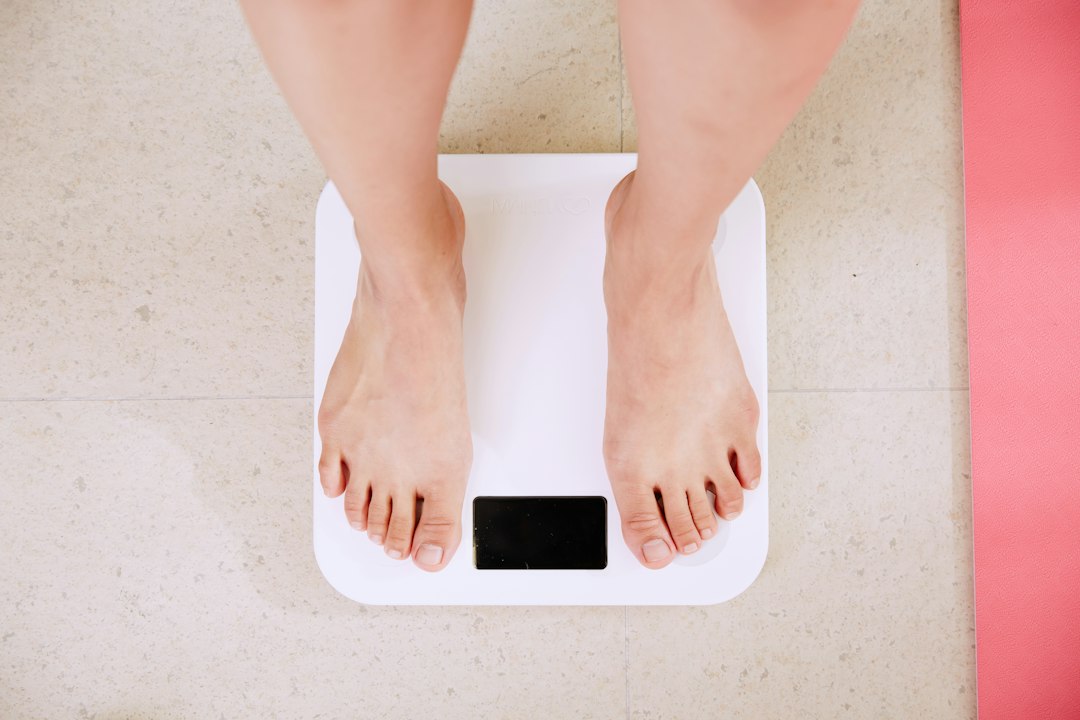
Most parents tracking their body during this period are doing it the wrong way. They step on a scale. The scale may not move much, or it may show a pound or two gained, which feels manageable. What the scale cannot show is where that change is happening inside the body.
Visceral fat is the specific type of fat that responds most aggressively to cortisol, sleep loss, and training interruption. It is also the type of fat most strongly associated with metabolic disease, cardiovascular risk, insulin resistance, and inflammation. And it is invisible to every consumer tracking tool: scales, fitness watches, tape measures, and mirrors.
On a clinical DEXA scan, visceral fat is measured and reported as a VAT score. For women, a visceral fat score in the range of 6 or 7 sits at a meaningful clinical threshold. A visceral fat 6 female score indicates the beginning of elevated metabolic risk—not emergency territory, but a signal that the trend line matters. A visceral fat 7 female score moves further into that elevated range and warrants direct intervention.
The important thing to understand is that visceral fat 6 and visceral fat 7 scores in women are not rare. They show up regularly in DEXA data from women who look healthy, exercise occasionally, and would never describe themselves as overweight. They also show up in women who have been doing everything right—until a season like back-to-school season quietly undoes months of progress. The scale may say healthy while visceral fat tells a different story entirely.
For men, the threshold dynamics are similar, though male bodies tend to accumulate visceral fat faster and in higher absolute quantities under the same stressors. The mechanism is the same: cortisol drives VAT accumulation, and back-to-school season is a sustained cortisol event.
The Couple Dynamic: Why This Season Hits Households Twice
For two-parent households, back-to-school season often creates a negative-sum dynamic. Both parents absorb the logistics load, which means both are sleeping worse, both are training less, and both are eating reactively. There is no one at home maintaining the habits—the environment itself degrades.
This is worth naming, because it means that in many Bay Area households, August and September are producing parallel body composition declines happening to two people simultaneously, with neither person measuring it and neither fully aware of what the other is experiencing. Couples who come into Kalos together consistently report that they had not realized until their scan results arrived that they were both on the same downward trajectory at the same time.
What the Data Looks Like After Back-to-School Season
Consider what six weeks of disrupted sleep, reduced training frequency, and degraded nutrition actually produces in DEXA scan data. The changes are not dramatic. They are quiet, which is precisely why they go unnoticed.
Lean mass in the lower extremities tends to drop first and fastest, because leg training—squats, lunges, deadlifts—is typically the first to go when time compresses. Lean mass loss accelerates meaningfully for adults over 40, and once lost, muscle requires substantially more effort to rebuild than to maintain.
Visceral fat, by contrast, tends to accumulate quickly under stress and resist rapid reversal. The pattern Kalos coaches observe repeatedly is this: parents come in for an October or November scan and discover that visceral fat has climbed—sometimes from a score of 4 or 5 to 6 or 7—during a period when they assumed their body composition was basically stable. They hadn't gained much visible weight. Their clothes fit roughly the same. But the scan reveals what the mirror cannot.
Stress-driven fat storage shifts are measurable, and they follow predictable patterns that only become visible when you're actually measuring the right things.
Why Parents Specifically Are Vulnerable
The fitness industry produces enormous amounts of content aimed at people with stable schedules, predictable weekly rhythms, and full control over their time. That content is functionally useless for parents navigating back-to-school season. Telling someone to hit the gym four times a week when their week looks like orientation, soccer tryouts, teacher night, and a work deadline collision is not a plan. It's a guilt machine.
What parents actually need during this period is a different kind of intervention: one that acknowledges the season, measures what's actually happening, and provides specific guidance that works within constrained windows rather than assuming optimal conditions.
This is the prescription problem the fitness industry consistently fails to solve. It can describe what's happening to your body. It cannot tell you what to actually do about it given your specific situation, your specific body composition data, and your specific constraints. Nutrition plans built without measuring actual body composition are guesses, not prescriptions.
What "Ruthless Prioritization" Looks Like for a Parent in August
When time compresses, most people try to maintain everything at reduced frequency. This is the wrong instinct. The right instinct is to identify the 20% of behaviors that drive 80% of results and protect only those.
For body composition during a disrupted period, the hierarchy is clear:
Protein intake is the single most important nutritional variable for preserving muscle mass during periods of reduced training. Hitting a daily protein target—even imperfectly, even with convenience sources—does more to protect lean mass than any other dietary behavior. Everything else can flex; protein cannot.
Resistance training frequency trumps duration. Two 25-minute sessions per week preserves substantially more muscle than one 60-minute session. The goal during back-to-school season is not to make gains. The goal is to send the muscle-preserving signal to the body consistently enough that it doesn't begin the dismantling process. Muscle memory is real, but it still requires a stimulus to activate.
Sleep, even imperfect sleep, matters more than most parents realize. A consistent bedtime—even 30 minutes earlier than current—has measurable downstream effects on cortisol regulation, hunger signaling, and visceral fat accumulation that exceed almost any supplement or intervention.
The Scan Timing That Most Parents Get Wrong
Most people who get DEXA scans do so after something has already gone wrong—after noticeable weight gain, after a doctor's comment, after a health scare. This is reactive measurement. It is the equivalent of getting bloodwork only when you feel sick.
The far more valuable approach for parents is to scan before back-to-school season creates disruption, then again after the acute period ends—typically late September or October. This gives you two data points that reveal exactly what the season actually did to your body composition, visceral fat score, and lean mass distribution. More importantly, it gives your coach something specific to work with.
If you already know that back-to-school season historically elevates your visceral fat from a score of 5 to 7, that information changes how you prepare. You can front-load training intensity in July. You can establish minimum viable protein targets in advance. You can identify which two training sessions per week are non-negotiable, even when the schedule implodes.
Retesting at regular intervals is what turns body composition data from a snapshot into a story—and the story of back-to-school season is one that most parents have been living without ever reading.
What a Body Composition Scan Near Me Actually Reveals
When Bay Area parents search for a body composition scan near me, they are often looking for a number. They want to know their body fat percentage. That number is useful. But it is the beginning of the analysis, not the end of it.
A clinical DEXA scan at Kalos produces a full picture: regional fat distribution (how much fat is in the trunk versus limbs, and specifically how much is visceral), lean mass by body segment (so you can see if your left leg has measurably less muscle than your right, or whether your upper body is significantly stronger than your lower in a way that creates injury risk), bone mineral density, and visceral adipose tissue measured in grams and reported as a score.
That visceral fat score—and specifically whether you're sitting at a visceral fat 6 female or visceral fat 7 female level—is not visible on a scale, not estimable from circumference measurements, and not detectable from how you feel. It is a number that exists inside your body and requires clinical measurement to access. For parents in their late 30s, 40s, and 50s who are navigating high-stress seasons repeatedly throughout the year, it is also one of the most consequential numbers they are probably not tracking.
Why This Matters Now, Not Later
August 2026 is already here. For many Bay Area parents, the next six weeks are going to be the most logistically compressed weeks of the year. The habits that held from February through July are about to face their most significant test.
Most parents will come out the other side of this season having lost some ground—a little lean mass here, a bump in visceral fat there—without ever knowing it happened. Their scale will tell them approximately nothing useful. Their fitness tracker will congratulate them for hitting step counts while their visceral fat climbs silently.
The parents who understand their baseline—who have a scan from July or early August—will come out of September knowing exactly what the season cost them and exactly what to do about it. Skipping measurement doesn't protect your progress. It just makes the losses invisible.
Kalos operates clinical DEXA scanning and personalized body composition coaching across San Francisco, Palo Alto, and San Jose. All services are HSA/FSA eligible. If you are searching for a body composition scan near me in the Bay Area, this is the starting point for actually understanding—and changing—what is happening inside your body during every season, including this one.

Ready to measure what matters?
Book your DEXA scan today and stop guessing about your health.