Strength Training Age 40: Does Effort Match Muscle Gained?
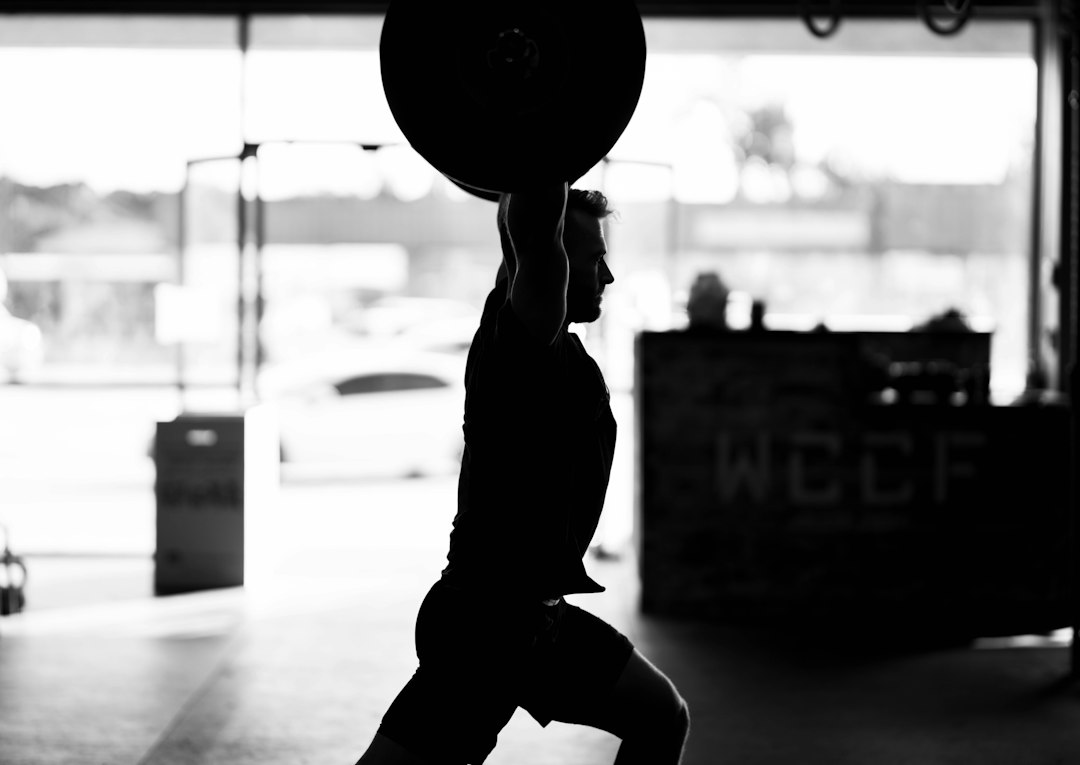
Forty hits differently in the gym. The effort you're putting in now—three or four sessions a week, progressive overload, protein tracking, the whole disciplined routine—feels like it should be paying off in a very specific way: visible, measurable muscle gain. But a lot of Bay Area lifters in their 40s hit a frustrating wall. The scale barely moves. The mirror looks mostly the same. And the question starts creeping in: is all this effort actually building muscle, or am I just maintaining what I already had?
This is exactly the kind of question a bathroom scale, a tape measure, or even a "body fat %" reading from a smart scale cannot answer with any precision. Scale weight doesn't distinguish between a pound of muscle and a pound of fat. Smart scales using bioelectrical impedance can swing by several percentage points depending on hydration, time of day, or what you ate for breakfast. If you genuinely want to know whether your training is converting into lean tissue, you need a measurement tool built for that specific job.
That's where DEXA comes in.
**Why Effort and Outcome Diverge After 40**
Muscle protein synthesis slows with age. Testosterone and growth hormone, both key drivers of hypertrophy, decline gradually starting in your late 30s. None of this means muscle gain stops—it means the margin for error shrinks. The same training program that built noticeable size at 28 might now only be enough to offset natural muscle loss, not add to it. This is the uncomfortable reality a lot of people don't want to hear: training hard at 40 might be keeping you from losing muscle rather than actively building it. Both outcomes look identical from the outside. They look very different on a scan.
We've covered this exact phenomenon in Muscle Gained on Paper—But Your Scan Disagrees?, where clients convinced their program was working discovered their lean mass had barely shifted over 90 days. The gap between perceived progress and actual tissue change is one of the most common surprises we see in the scanning room.
**What a DEXA Scan Actually Tells You**
A dexa scan body composition near me search usually comes from someone who's already tried scales, calipers, or InBody machines and walked away unsatisfied with the precision. DEXA (dual-energy X-ray absorptiometry) was developed for clinical bone density testing and happens to be the gold standard for body composition because it separates your body into three distinct compartments: fat mass, lean mass, and bone mineral content. It does this with a margin of error around 1-2%, compared to 3-8% for bioimpedance devices.
For someone strength training at 40, the metrics that matter most are:
- **Total lean mass change** — Is your muscle tissue actually increasing, or holding steady?
- **Regional lean mass** — Are gains happening where you're training (legs, back, arms), or is there asymmetry?
- **Visceral adipose tissue (VAT)** — Is fat around your organs shrinking even if the scale isn't moving?
- **Appendicular lean mass index (ALMI)** — A longevity-linked metric that predicts how well you'll maintain functional strength as you age. We go deep on this in Appendicular Lean Mass Index: The Number Your Doctor Never Checks.
This is dexa scan body fat accuracy in practice: you stop guessing based on how your clothes fit and start working from a precise, repeatable number.
**The Symmetry Problem Most Lifters Never Check**
Something we see constantly with 40+ clients who've been training for years: strength numbers climbing on compound lifts while one side of the body is quietly doing more of the work. A dominant leg driving a squat. A stronger arm compensating on a deadlift. Your 1-rep max keeps going up, so you assume everything is balanced—until a scan shows a 12-15% lean mass difference between left and right limbs.
We explored this in detail in Strength Gains Look Real—Until Scans Expose Muscle Symmetry and again in Deadlift Numbers Climbing—But Is Muscle Actually Growing?. Strength numbers alone can mask imbalances that matter for both injury risk and long-term joint health.
**Why "Muscle vs. Scale Weight" Is the Wrong Debate at 40**
If you're still anchoring progress to a number on the scale, you're working with the wrong variable. We wrote about this directly in Muscle Versus Scale Weight: What Matters More After 40? A lifter who gains three pounds of muscle while losing three pounds of fat shows zero net change on a scale but a meaningfully different, more capable body. This is the body recomposition story that DEXA uniquely captures, and it's also why we dig into it further in Body Recomposition After 45: Does Your Effort Match Your Results?
**Creatine, Protein, and Other Variables Worth Isolating**
If you're already supplementing with creatine to support muscle growth, it's worth knowing what that supplement is actually doing versus what training alone accomplishes. Our piece on Creatine After 40: Does Muscle Actually Grow? breaks down how to separate water retention from genuine lean tissue gain—a distinction that matters a lot when you're evaluating whether your program is working.
**The Kalos Approach: Measure, Adjust, Iterate**
At Kalos, we don't start with a methodology and hope it fits you. We start with your data. A baseline DEXA scan establishes exactly where your lean mass, fat mass, and visceral fat stand today. From there, our NASM-certified coaches—many with backgrounds from Harvard, Stanford, Cambridge, and elite athletic programs—build a program around what your body actually needs, then rescan to confirm it's working. If the numbers move the way they should, we keep going. If they don't, we adjust. No guessing, no one-size-fits-all programs, no waiting six months to find out your effort wasn't translating.
This bottom-up approach is the opposite of the fitness industry's default: pick a program, commit blindly, hope for the best. We measure, we prescribe, we retest. It's the only way to know, with certainty, whether your 40s strength training effort is actually producing the muscle you're working for.
With locations in San Francisco, Palo Alto, and San Jose (Pruneyard), and over 3,000 scans completed with a 4.9-star rating across 500+ reviews, Kalos has built its model around exactly this question. All scans and coaching services are HSA/FSA eligible.
If you've been training hard at 40 and want a real answer—not a guess—about whether your muscle is actually growing, a DEXA scan is where that answer starts.

Ready to measure what matters?
Book your DEXA scan today and stop guessing about your health.