Tracking Bone Density Shifts When Estrogen Drops Unexpectedly

Somewhere between the hot flashes, the missed periods, and the 2am wake-ups, a lot of women in their late 30s and 40s start noticing a new kind of ache — a dull soreness in the hips, lower back, or knees that wasn't there a year ago. It gets written off as "getting older" or "too much cardio." But perimenopause bone pain is rarely random. It's often the earliest physical signal that estrogen — the hormone that helps regulate bone remodeling — has started dropping unpredictably, years before a single missed period would make you think "menopause."
Estrogen doesn't decline in perimenopause the way most people imagine. It doesn't taper smoothly downward. It swings. Some months it spikes higher than baseline; other months it crashes. Those crashes are when bone resorption (breakdown) can temporarily outpace bone formation, and research increasingly shows that a meaningful chunk of lifetime bone mineral density loss happens during this volatile window — not after menopause, when most women finally get screened.
This is the core problem: standard care waits. Most primary care providers don't order a bone density scan until a woman is well past 50, often only after a fracture or a "why does my back hurt" visit prompts one. By then, the loss has already happened. You weren't tracking the slope — you only saw the endpoint.
**Why a DEXA bone scan near me catches what symptoms can't**
Perimenopause bone pain is a lagging indicator. By the time joints ache or posture starts to shift, bone mineral density (BMD) may have already declined meaningfully. A DEXA scan is the only widely available tool that measures BMD directly, with the precision to detect small year-over-year shifts — long before pain, fracture, or height loss make the problem obvious.
At Kalos, bone mineral density sits on the Longevity vertex of what we call the Health Triangle, alongside visceral adipose fat, appendicular lean mass index (ALMI), and VO2 max. These are the metrics that predict how well you age — not how you look in a photo. For women navigating estrogen volatility, BMD and ALMI together tell a much more complete story than the scale or a mirror ever could, since muscle and bone tend to decline together once estrogen starts dropping. We've covered this pairing in detail in Tracking Muscle Shifts During Perimenopause Changes Everything and Appendicular Lean Mass Index: The Number Your Doctor Never Checks.
**What we actually see on scans**
Across 3,000+ scans in San Francisco, Palo Alto, and San Jose (Pruneyard), a recurring pattern shows up in women in their early-to-mid 40s: body weight is stable, visceral fat may even look "fine," but BMD has quietly declined 3–6% in a single year, often paired with a drop in lean mass in the arms and legs. Nothing on a bathroom scale or in a wearable app would have flagged it. This mirrors what we've documented in Perimenopause Visceral Fat Spikes—Even When Workouts Stay Consistent and Perimenopause Belly Fat Is Different—Scans Prove It: the body is quietly redistributing and restructuring while every surface-level number stays deceptively normal.
**Why "near me" matters for this specific window**
Estrogen swings during perimenopause can happen over months, not years. That's why we recommend women in this window scan more frequently than the typical annual bone density check — closer to every 4–6 months during active symptom years — so coaching and training can respond to the trend line, not a single snapshot. This is only practical with a local, repeatable scanning relationship, which is part of why we built Kalos around clinical-grade DEXA paired with ongoing coaching rather than a one-off diagnostic visit. If you're earlier in the process and want the baseline context, Bone Loss Accelerates in Your 40s—Are You Measuring It? and our deeper look at perimenopause-specific bone density loss walk through what the decade before menopause typically looks like on a scan.
**What actually moves the needle once you know**
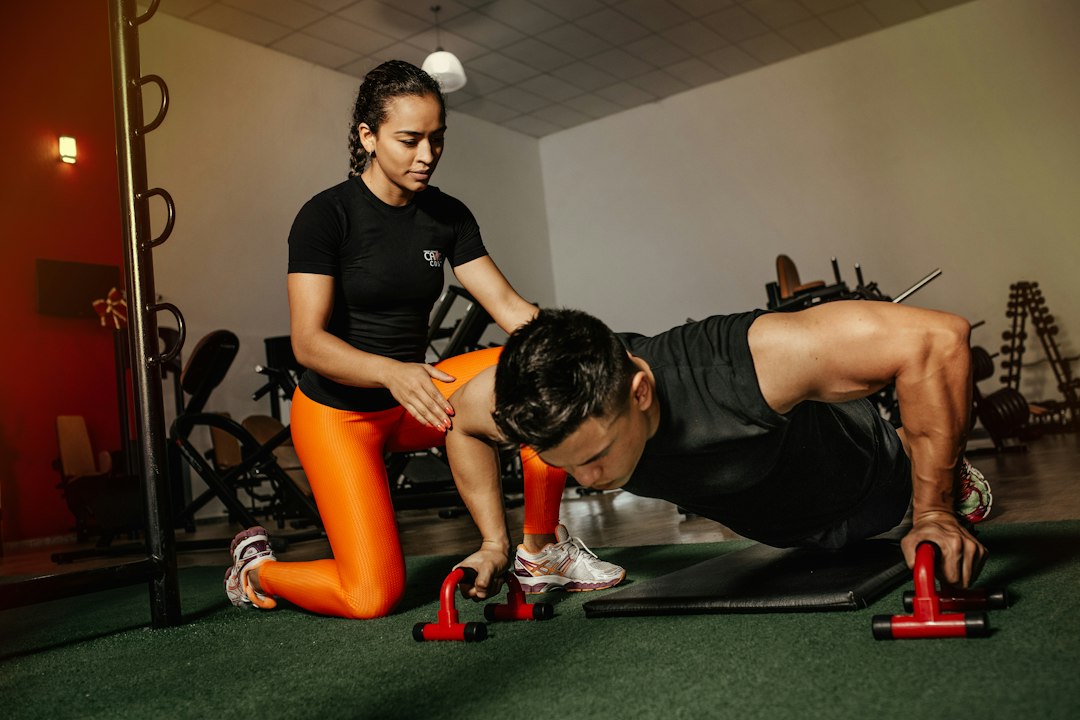
A scan tells you where you stand. It doesn't train you. Our coaches — all NASM-certified, with backgrounds spanning Division I athletics, Olympic trials, and data science — build programs around the same ruthless prioritization we apply to every client: for bone and muscle preservation during estrogen volatility, consistency with resistance training (the 80% that matters most) beats chasing the latest supplement or recovery trend every time. That's not guesswork — it's the pattern we re-confirm scan after scan, and it's the same logic behind Tracking Sarcopenia Risk Before Symptoms Appear.
If perimenopause bone pain has you wondering what's actually happening underneath, the answer isn't more guessing — it's a scan, a baseline, and a plan to track the trend before it becomes a diagnosis. All Kalos scans and coaching are HSA/FSA eligible, and sessions are available across our three Bay Area locations.

Ready to measure what matters?
Book your DEXA scan today and stop guessing about your health.